Published April 16th, 2013, in Valley Times, Cave Junction, OR
Fermented foods promote healthy, balanced flora in our ‘gut gardens’
By Lisa Rohde For the VT
Spring is a meaningful time when we put forth energy to till the earth and grow our gardens full of food to feed our families. On a deeper level, within each of us is an internal gut garden designed to fuel and nourish our body vessels in order to allow each individual to express their fullest potential in life.
It is very important to note, as species of the earth must coexist in life, we too must coexist with all of the many microorganisms within each of us. We depend upon a multitude of microflora within our gut gardens to transform nourishing food into fuel and maintain optimal bodily health.
In todays environment we all bare a body burden of toxic chemicals due to pollution exposure from the air we breath, the water drink, the food we eat, the pharmaceuticals we consume, in particular antibiotics. The result, all too often, is a weakened or damaged internal gut garden, along with autoimmune disorders, obesity, heart disease and cancer.
The human body is a complex ecosystem composed of trillions of bacteria, that is capable of social network communication. Recent research indicates that bacterial cells in the body outnumber human cells ten to one. Bacteria and other microorganisms inhabit all parts of our body: skin, genitals, mouth and in particular our gut. Our gut is sometimes refered to as our “second brain”. Our gut communicates with all other parts of our body. Have you ever heard instinct or intuition referred to as “gut feeling”? This is our “gut garden” our “second brain”.
When one uses antibiotics the drugs go to work killing the nasty bug that have got you down. However antibiotics kill all bacterial, bad and good alike. In the absence of friendly bacteria, you lack many helpers that are responsible for manufacturing your food into useful nutrients and vitamins. Moreover, your social network system is down and your immune systems ability to communicate effectively is worsened.
Once antibiotics clear out all bacterial microorganisms, the bad and the good, other critters including viruses, parasites or fungi such as yeast, specifically Candida albicans, can turn pathogenic, further upsetting our balance since there is plenty of room to move and multiply.
Pathogenic organisms including including those mentioned above, thrive on the standard American diet, which is comprised of mostly nutrient deficient, highly refined foods and sugar. Allowed to go unchecked in the body, these offenders can wreak havok on our digestion, rob us of our nutrients, and even infiltrate other areas of our body, bringing a wak of damage with them.
Some bacteria produce deadly toxins, and most often, pathogenic organisms by-product is toxic to us and are polluting us from the inside out. On the other hand, friendly bacteria produce life-giving vitamins and maintain the human body’s optimal healthy blood pH of 7.45, which is slightly alkaline. In order to achieve blood alkaline conditions, one must consume a mostly alkaline diet. This means incorporating mostly veggies in particular greens from the land and sea into your diet. Your diet may include whole grains, low food chain wild fish such as sardines or sockeye salmon (as they bioaccumulate less toxins than other fish), quality eggs, meat or dairy in moderation. Whole fruit is best eaten alone for optimal digestion. Combined incorrectly, fruit can cause fermentation and the creation of sugars in your gut which feed pathogenic organisms.
Supplementing with pro-biotics, which living beneficial microorganisms, can help to aid digestion and protect ones immune system, especially in todays environment. Probiotics can also be used in conjunction with antibiotics to help mitigate the effects of sometimes necessary western drugs.
One may also find friendly microorganisms in living foods such as raw sauerkraut, kimchi (see side bar for recipe), and kefir to name a few. Yogurt most often comes equipped with friendly lactobacillus acidophilus and bifido bacterium.
The bottom line is, if we are to survive and thrive, we need to coexist with an entire internal ecosystem centered around our gut garden, which manufactures fuel for our cells. Ultimately, we want to approach our health in a way that supports our delicate microflora balance by incorporating a healthy alkaline diet including plenty of veggies and greens, probiotics, living and cultured foods, water, exercise, prevention, and natural and safe remedies as provided by nature. If modern drugs such as antibiotics are necessary, one must pay extra attention to recolonizing our internal gut garden with beneficial flora. We need to be especially vigilant to protect todays children and educate them as to how to live in harmony with their internal gut gardens.
Lisa Rohde Holistic Health Coach, is an expert in the field of preventative medicine with a professional certificate from the Institute of Integrative Nutrition. Rohde offers individual counseling, workshops and group classes. Connect with Rogue Living Well on Facebook and to learn more visit www.RogueLivingWell.com.
***
Fermenting of foods is a process in which foods are pre-digested by friendly enzymes and good bacteria. Cultured veggies’ are strengthening to the immune system, are soothing to the nervous system, help reduce sugar cravings and regulate weight and appetite.
Sauerkraut Basics:
You will need:
* one gallon air tight jar with fermentation dome
* one smaller glass jar
3-4 head organic cabbage
6-10 organic carrots
one head garlic
high quality sea salt
probiotics (powder or capsule form)
food processory (optional)
large wooden soup ladle or other tool for pounding
large glass bowl
To Prepare Sauerkraut:
Peel outer leaves fro cabbge and set aside.
Finely chop cabbage, carrots and garlic or shread in a food processor.
Combine ingredients in large glass bowl. Mix thoroughly.
Add 3-6 tablespoons of sea salt and combine. Properly fermented sauerkraut should still have a crunchy texture.
Add 3 capsules probiotics and mix. (Adding probiotics speeds up the fermentation process)
Pound the sauerkraut until you notice juices releasing.
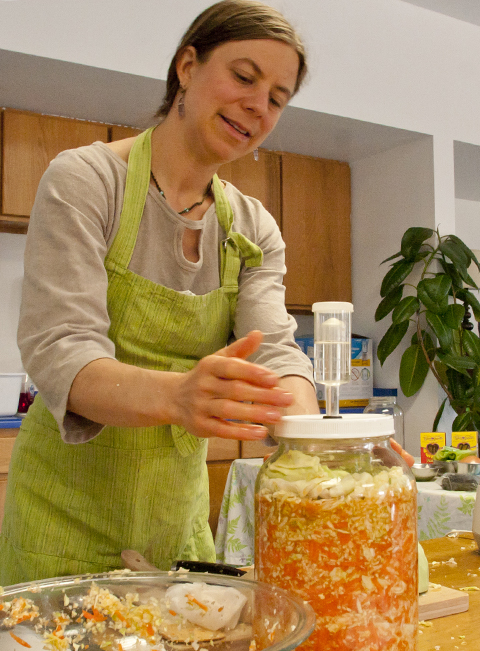
Pack the sauerkraut into the Fermentation Dome be sure to press the kraut firmly into the bottom of the jar to eliminate any air bubbles that may be present.
Once the jar is mostly full, use the cabbage leaves that you have set aside tocover the top of your kraut.
Place a small jar with a little filtered water on top of the bed of cabbage leaves.
Fill your air tight water seal lid iwth filtered water to the line and place the lid atop your fermentaiton jar.
Keep an eye on your kraut for the first couple days and add more water or brine if necessary (all of your veggies shoul dbe submerged in the juices, I rarely have to add additional liquids). Your sauerkraut will be done in approximately one to two weeks (it takes loner without probiotics).
Kimchi Tips:
Dress up your Sauerkraut with more flavors and it will be kimchi. My favorite combination is green cabbage, carrots, broccoli, kale, red pepper, onion, garlic sea palm fronds or hijiki (sea veggies), turmeric, Himalayan Sea Salt, and FriendlyForce Probiotics.
Note: By adding raw sea veggies to your kimchi you may reduce the amount of sea salt you need to add. Properly made kimchi should still have a crunchy teture.
Sauerkraut is possible with little or no salt by fermenting the cabbage in wine, substituting caraway, celery and dill seeds for the salt or using seaweed in place of salt. Salt-free kraut has a shorter lifespan than salted kraut. Since feremetnaiton goes faster without salt, be sure to taste salt-free kraut frequetnly to monitor its progress and refrigerate it after a week or so.
Fermented foods promote healthy, balanced flora in our ‘gut gardens’
By Lisa Rohde For the VT
Spring is a meaningful time when we put forth energy to till the earth and grow our gardens full of food to feed our families. On a deeper level, within each of us is an internal gut garden designed to fuel and nourish our body vessels in order to allow each individual to express their fullest potential in life.
It is very important to note, as species of the earth must coexist in life, we too must coexist with all of the many microorganisms within each of us. We depend upon a multitude of microflora within our gut gardens to transform nourishing food into fuel and maintain optimal bodily health.
In todays environment we all bare a body burden of toxic chemicals due to pollution exposure from the air we breath, the water drink, the food we eat, the pharmaceuticals we consume, in particular antibiotics. The result, all too often, is a weakened or damaged internal gut garden, along with autoimmune disorders, obesity, heart disease and cancer.
The human body is a complex ecosystem composed of trillions of bacteria, that is capable of social network communication. Recent research indicates that bacterial cells in the body outnumber human cells ten to one. Bacteria and other microorganisms inhabit all parts of our body: skin, genitals, mouth and in particular our gut. Our gut is sometimes refered to as our “second brain”. Our gut communicates with all other parts of our body. Have you ever heard instinct or intuition referred to as “gut feeling”? This is our “gut garden” our “second brain”.
When one uses antibiotics the drugs go to work killing the nasty bug that have got you down. However antibiotics kill all bacterial, bad and good alike. In the absence of friendly bacteria, you lack many helpers that are responsible for manufacturing your food into useful nutrients and vitamins. Moreover, your social network system is down and your immune systems ability to communicate effectively is worsened.
Once antibiotics clear out all bacterial microorganisms, the bad and the good, other critters including viruses, parasites or fungi such as yeast, specifically Candida albicans, can turn pathogenic, further upsetting our balance since there is plenty of room to move and multiply.
Pathogenic organisms including including those mentioned above, thrive on the standard American diet, which is comprised of mostly nutrient deficient, highly refined foods and sugar. Allowed to go unchecked in the body, these offenders can wreak havok on our digestion, rob us of our nutrients, and even infiltrate other areas of our body, bringing a wak of damage with them.
Some bacteria produce deadly toxins, and most often, pathogenic organisms by-product is toxic to us and are polluting us from the inside out. On the other hand, friendly bacteria produce life-giving vitamins and maintain the human body’s optimal healthy blood pH of 7.45, which is slightly alkaline. In order to achieve blood alkaline conditions, one must consume a mostly alkaline diet. This means incorporating mostly veggies in particular greens from the land and sea into your diet. Your diet may include whole grains, low food chain wild fish such as sardines or sockeye salmon (as they bioaccumulate less toxins than other fish), quality eggs, meat or dairy in moderation. Whole fruit is best eaten alone for optimal digestion. Combined incorrectly, fruit can cause fermentation and the creation of sugars in your gut which feed pathogenic organisms.
Supplementing with pro-biotics, which living beneficial microorganisms, can help to aid digestion and protect ones immune system, especially in todays environment. Probiotics can also be used in conjunction with antibiotics to help mitigate the effects of sometimes necessary western drugs.
One may also find friendly microorganisms in living foods such as raw sauerkraut, kimchi (see side bar for recipe), and kefir to name a few. Yogurt most often comes equipped with friendly lactobacillus acidophilus and bifido bacterium.
The bottom line is, if we are to survive and thrive, we need to coexist with an entire internal ecosystem centered around our gut garden, which manufactures fuel for our cells. Ultimately, we want to approach our health in a way that supports our delicate microflora balance by incorporating a healthy alkaline diet including plenty of veggies and greens, probiotics, living and cultured foods, water, exercise, prevention, and natural and safe remedies as provided by nature. If modern drugs such as antibiotics are necessary, one must pay extra attention to recolonizing our internal gut garden with beneficial flora. We need to be especially vigilant to protect todays children and educate them as to how to live in harmony with their internal gut gardens.
Lisa Rohde Holistic Health Coach, is an expert in the field of preventative medicine with a professional certificate from the Institute of Integrative Nutrition. Rohde offers individual counseling, workshops and group classes. Connect with Rogue Living Well on Facebook and to learn more visit www.RogueLivingWell.com.
***
Fermenting of foods is a process in which foods are pre-digested by friendly enzymes and good bacteria. Cultured veggies’ are strengthening to the immune system, are soothing to the nervous system, help reduce sugar cravings and regulate weight and appetite.
Sauerkraut Basics:
You will need:
* one gallon air tight jar with fermentation dome
* one smaller glass jar
3-4 head organic cabbage
6-10 organic carrots
one head garlic
high quality sea salt
probiotics (powder or capsule form)
food processory (optional)
large wooden soup ladle or other tool for pounding
large glass bowl
To Prepare Sauerkraut:
Peel outer leaves fro cabbge and set aside.
Finely chop cabbage, carrots and garlic or shread in a food processor.
Combine ingredients in large glass bowl. Mix thoroughly.
Add 3-6 tablespoons of sea salt and combine. Properly fermented sauerkraut should still have a crunchy texture.
Add 3 capsules probiotics and mix. (Adding probiotics speeds up the fermentation process)
Pound the sauerkraut until you notice juices releasing.
Pack the sauerkraut into the Fermentation Dome be sure to press the kraut firmly into the bottom of the jar to eliminate any air bubbles that may be present.
Once the jar is mostly full, use the cabbage leaves that you have set aside tocover the top of your kraut.
Place a small jar with a little filtered water on top of the bed of cabbage leaves.
Fill your air tight water seal lid iwth filtered water to the line and place the lid atop your fermentaiton jar.
Keep an eye on your kraut for the first couple days and add more water or brine if necessary (all of your veggies shoul dbe submerged in the juices, I rarely have to add additional liquids). Your sauerkraut will be done in approximately one to two weeks (it takes loner without probiotics).
Kimchi Tips:
Dress up your Sauerkraut with more flavors and it will be kimchi. My favorite combination is green cabbage, carrots, broccoli, kale, red pepper, onion, garlic sea palm fronds or hijiki (sea veggies), turmeric, Himalayan Sea Salt, and FriendlyForce Probiotics.
Note: By adding raw sea veggies to your kimchi you may reduce the amount of sea salt you need to add. Properly made kimchi should still have a crunchy teture.
Sauerkraut is possible with little or no salt by fermenting the cabbage in wine, substituting caraway, celery and dill seeds for the salt or using seaweed in place of salt. Salt-free kraut has a shorter lifespan than salted kraut. Since feremetnaiton goes faster without salt, be sure to taste salt-free kraut frequetnly to monitor its progress and refrigerate it after a week or so.