
Sprouting and Favorite Sprouted Travel Staples
By Lisa Shelton, CHC, RYT200, CPT
July 23, 2018
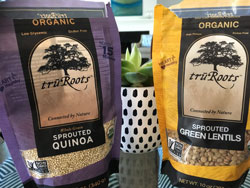
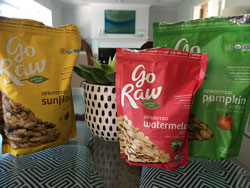
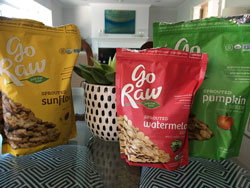
I sprout my own quinoa and lentils prior to cooking, and I sprout my own seeds, then dehydrate and store to toss into smoothies. Why do I sprout, because, grains, seeds, nuts, and legumes have a protective coating that is high in phytic acid, actually all plants do to some degree, and sprouting helps to predigest and reduce the amount of phytic acid. Sprouting also enhances enzymes and makes nutrients more bioavailable to the body. If you want to take it a step further, try fermenting. The fermenting process makes minerals and nutrients more absorbable and bioavailable to your body. Sprouting and fermenting was standard practice before the industrial revolution. When I travel it is nice to find pre-spouted options in the market. My favorite sprouted travel staples are True Roots sprouted quinoa and sprouted lentils, and Go Raw sprouted pumpkin seeds, sprouted sunflower seeds, and sprouted watermelon seeds.
Phytic acid is not digestible and reduces the digestibility of the grain, seed, nut, or legume being consumed. Quinoa in particular is very high in phytic acid and for many can cause an upset stomach if not properly prepared with soaking and sprouting prior to cooking. Furthermore, phytic acid is a nutrient inhibitor or an anti-nutrient. An anti-nutrient binds minerals in the digestive tract, in other words it robs your body of of nutrients in order to process, and it can leave you with reduced iron absorption.
On the other hand, phytic acid may bind to heavy metals and help to clean up the body. So depending on the bodies state of internal ecosystem, if minerals are depleted (ie. iron deficiency), or if digestion is less than adequate, then less phytic acid and sprouting may be most beneficial. This may be the case for many people today. However, if digestion is strong and mineral deficiencies are not of concern, then higher levels of phytic acid may have protective elements against cancer and tumor growth and cardiovascular disease in reducing hardening of the arteries. The bottom line is everyone is unique and individual, know your body and find out what works best for you.
How do you sprout and ferment your grains, seeds, nuts, and legumes? I like to soak for 6-12 hours in a jar covered with a screen or a cloth and rubber band. Add a touch of raw apple cider vinegar, whey or lemon juice to get the ferment effect. Rinse well, then sprout by turning the jar upside down over a pie cooling slatted frame and plate to catch the drip, or simply tilt over a plate by placing a utensil beneath the upside down jar with the idea that the jar can breath from beneath. Sprout for an additional 6-12 hours. Feel free to rinse more often throughout the process if you are able to. Rinse a final time then cook your grains (ie. rice, oats) or grain-like seeds (ie. quinoa, amaranth, millet), and legumes, or dehydrate your seeds and nuts for storage. An exception to this is buckwheat, you will not want to soak buckwheat for more than one hour or it will turn to mush. Find a rhythm, prepare one grain or seed-like grain enough to enjoy for several days, then prepare a different grain or seed-like grain for the next batch, thus rotating what is in your diet for benefits of variety.