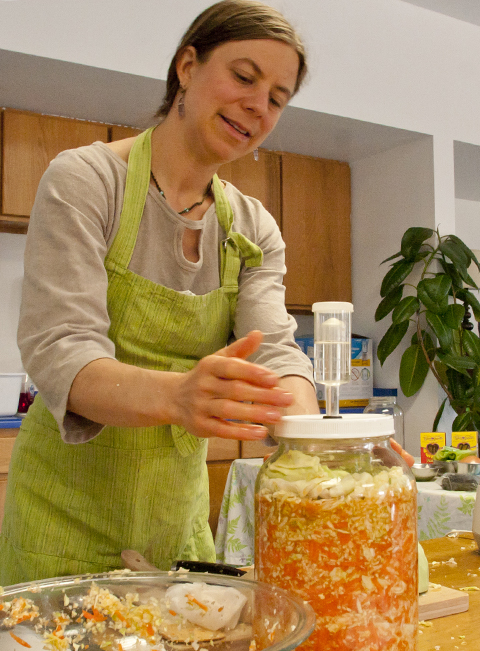

The following is a sneak peak into my SOU MAT program, action research progress. A wonderful and meaningful work in progress, offering very inspiring direction for school wellness programs:

How to Integrate Holistic Nutrition Education
Into the Elementary Curriculum
By Lisa Shelton Rohde
December 2015
In the wake of an increasingly toxic world, and the Standard American Diet (SAD), health concerns in all ages are on the rise, sadly including children. “In the past 30 years, childhood obesity has increased exponentially, doubling in children and nearly tripling in adolescents... Obese youth are more likely to be at risk for factors leading to cardiovascular disease, type 2 diabetes, bone and joint problems, and social and psychological problems” (Rodriguez, Lamm, Odera, Owens, Thompson. 2015, p1). Furthermore cancer is on the rise and allergies are plaguing increasing numbers of children. Children need to learn the skills and tools to be responsible for their own health, and a path of awareness and prevention is best begun at a young age.
Schools, as a means of social re-constructivism, are in a position to contribute towards the development of, vibrant, healthy, and mindful leaders of tomorrow. Additionally “there is strong evidence linking healthy nutrition and physical activity with improved academic performance and classroom behavior among school-age children” (Hughes, Savoca, Grenci. 2015, p1). In other words feeling good in ones body is crucial to enhance clarity of mind, student focus, and academic performance.
Children today need healthy role models more than even. Currently the world is more polluted, and our food is more processed and denatured then ever before. Furthermore, children, for the percentage of their body weight, breath more air, drink more water, and eat more food than adults do, and furthermore their skin is more porous and absorbent, thus, children bare the brunt of our toxic world. Children are born into this world with a toxic soup of pollutants already in their little bodies. If we are to give the children of today a bright future, children need to learn how to care for themselves, and the environment, and food is a place of leverage and fertile ground to steer kids in an empowered direction of wellness and environmental stewardship.
Children need good leaders to demonstrate and model healthy lifestyle. One of the biggest challenges teachers face today is having been raised with the SAD diet themselves, and having received very little health coaching in their lifetime. Many teachers attitude towards instructing health and nutrition suffers from lack of knowledge, preparedness, and time in the school day. Teachers should feel empowered to learn about a topic as intrinsically important as wellness and nutrition. “Having a diet high in fruit and vegetable intake and low in excess sugars is essential to maintaining a healthy body weight” (Rosemond, Blake, Jenkins, Buff, Moore 2015, p.1). Practicing nutritional insight will benefit teachers and students alike, not to mention the healthy ripple effect it will have beyond the school.
As a certified health coach, CHC, my vision as a teacher is to inspire healthy, happy, and vibrant students making positive changes in this world. Initially during phase one of my research, I asked, how to integrate holistic nutrition education into the elementary curriculum? I then defined Holistic Nutrition Education. Holistic Nutrition goes beyond the basics of food and eating, to include all the enriching primary foods in our life such as exercise, relationships, creativity, spirituality, and joy to name a few, as these qualities in life support the whole child... The following literature review, offers insights into healthy directions for schools.
Background
Schools As a Vessel for Improving Children's Health
Because children have reoccurring contact with schools throughout their years, schools serve as an important opportunity to provide continuous nutrition education and accountability over time. “It has been shown that increased exposure to messages increases both understanding and retention of information; repeated exposure to health messages has a great impact” (Rosemond, et al, 2015, p5). Making changes in diet can be very challenging especially if you already harbor a tone of unhealthy habits. The ability of schools to provide repeated messages and accountability over time and years, enhances ones ability to integrate new and healthier beneficial habits into ones life.
The Junior Doctors of Health (JDOH) mentoring and skill building program in South Carolina schools, with students (133 students with intervention) in grades 4-6, set out to increase student “self-efficacy” for healthy food choices through offering in collaboration with a medical university, school district, and community organization. The partnership afforded a sustainable approach without financial burden. The JDOH program provided three, one-hour long sessions in which students learned about nutrition, healthy snacks, the human body, skill building, and health related careers. Students logged the amounts of fruits, vegetables and sugary-beverages consumed between sessions.
The JDOH study determined, positive trends in healthy food choices, although, results were not significant statistically speaking. Self-efficacy with increased veggie consumption was significant for boys and girls at P<.05 (Rosemond et al, 2015). More specific examples, the intervention group boys showed a mean increase of more than 9 servings of vegetables each week. Girls decreased consumption of sugary beverages and 100% fruit juice by about 4.5 servings a week. Thus three nutritional knowledge sessions with reflective assignments, or food logging between sessions, proved to enhance positive trends in healthier food choices among students. Longer term exposure to the JDOH program may result in more significant healthy food choices, thus more long term study is needed.
The study implementing JDOH does mention that some of the students in intervention and control groups may have received the JDOH program as many as 2-4 times over the years. This draws question to the conclusions of this study. One might steer continuation of this study in a direction in which kids receiving the JDOH program repeatedly from year to year might show greater self-efficacy for increasing healthier food choices than kids new to the program.
Integrate Nutrition Education into the Curriculum Subjects
Currently very little emphasis in the classroom is on nutrition education. “On average, students received < 4 hours of nutrition instruction per year. Research suggests at least 10-15 hours of classroom-based education is required to produce medium effects... on health knowledge” (Carraway-Stage, Hovland, Showers, Díaz, Duffrin. 2015, p1). Health can certainly be integrated into the curriculum, science, math, reading and writing, music, art. Science certainly offers a way to increase nutritional knowledge while offering meaningfulness and interconnectedness to a subject as well as a hands on, integrative approach to learning (Carraway-Stage et al. 2015).
The Carraway-Stage study of 2009-2010, with nine fourth grade classrooms incorporated FoodMASTER Intermediate nutrition into their science curriculum (8 classrooms were the control). Though, classrooms were recommended and not randomized or intervention based on likely teacher cooperation. Students were evaluated through questionnaires that were given uniformly pre and post intervention. The findings determined there was significant nutritional knowledge improvement p<.01 following post intervention (Carraway-Stage et al. 2015). The study suggests continued improvements of their nutrition integration curriculum will produce larger gains in nutrition knowledge. Integrating nutrition education may bring more meaningfulness to other topics and therefore higher transferring and processing rates. It would be interesting to see future studies geared towards determining whether student gained knowledge of a certain content area, such as science, or math, is simultaneously increased with incorporation of meaningful and interactive nutrition curriculum integration.
Youth Advisory Council For Wellness
When adopting a school wellness policy why not “empower students to present input, insights, and ideas about nutrition and physical activity recommendations at their school” (Hughes et al, 2015, p2). A student led Youth Advisory Council (YAC) is just the team to manage the task. Engaging students to take leadership and ownership of their health, and to look out for the health of their peers, will no doubt nurture any school community deeply.
The Hughes et al study formed one such YAC for School Wellness involving 15 students, grades 3-6 (Hughes et al, 20153). Due to time and budget constraints the Wellness YAC was adopted by the existing Paulsboro Active Learning Center Student Council after school program. Phase I survey results indicated students concern for cafeteria menu improvement, request for more fruits and veggies, and complaints about the food lines. Additionally, majority of students enjoyed PE but requested improved recess play equipment such as balls and jump ropes. During Phase 2, the cafe menu was improved with more fruits and vegetables, serving line observations detected insufficient number of food trays slowing the line, so more trays were purchased. The PE teacher received positive report back. A needs list was created and resulted in “the purchase of a basketball court, a Dance Revolution group game system, balls, jump ropes, baseball equipment, footballs, and so forth with grant funds provided through the AFHK grant” (Hughes et al, 2015, p4). Additionally storage and locks were provided for equipment.
Youth Advisory Councils serve as an important voice in supporting school wellness initiatives. “Students have important opinions, and good ideas... engaging them in the wellness conversation, they take ownership of school wellness projects” (Hughes et al, 2015, p5). When students take leadership of their school and ownership of their health they take on a positive-growth mindset, and these students will likely excel in many areas. Additionally, some peers learn better from people their own age, and receiving the wellness message from a peer who cares is really powerful. Future studies could look at how students do academically when they engage in a YAC Wellness team.
Healthy Foods & Holistic Nutrition in the Garden
School based gardens serve as an opportunity to integrate holistic nutrition education into the curriculum. While kids spend time in the garden planting, weeding, or harvesting, while engaging and learning knowledge of food production, they are also spending time outdoors, having fun, moving around, and working hard. Children learn to work together collectively, and they discover the symbiotic relationship between people and veggie plants; we need each other to thrive. The garden goes beyond food nutrition to include many of the primary foods in ones life including joy, creativity, exercise, relationships, life skills, and more. “Research has show that Extension school garden programs help increase student activity and health (Odera et al., 2013; Phelps, Hermann, Parker, & Denney, 2010)” (Rodriguez et al, 2015. p. 1-2). The garden is enriching and a suitable topic to integration in all core curriculums. Furthermore, “Gardens are said to increase student academic and social skills (Armstrong, 2000; Blair, 2009; Ozer, 2007)” (Rodriguez et la, 2015, p5)
Based in, Florida the Rodriguez et al Study of 2011-2013 focuses on three schools representing minority African American and Hispanic demographics. Specifically these rural, low income and poverty stricken communities were sought out for the study to determine the beneficial impacts of a school garden program. The study focused on determining students feelings and perceptions of how their lives were impacted from the school garden program (Rodriguez, et al 2015) in addition to increasing knowledge of food production, and providing “children with the skills and knowledge to lead healthy lives is a way to combat this epidemic” (Rodriguez, et al, 2015, p1) of obesity.
Students received a questionnaire driven by a moderator guide and “Overall, the participants thought gardening at school was a great idea and that it would be beneficial to have gardens in other schools” (Rodriguez et al, 2015, p2). Participating students said things such as “The garden provides food and energy to help you grow” (Rodriguez et al, 2015, p.3) and “Vegetables help the immune system and blood pressure and help prevent disease” (Rodriguez et al, 2015, p3). Another participant says, “We need plants because the air that we breathe it has chemicals in it so when it goes through the leaves it gets stuck on the leaves and new air come out” (Rodriguez, et al, 2015, p3). Also, “We get to have fun and plant vegetables for people who don’t have vegetables to buy... vegetables could be donated” (Rodriguez et al, 2015, p3). Two participants said their veggies “had to be with cheese” (Rodriguez et al, 2015, p4), and another said, “I just eat my vegetables raw because it’s better” (Rodriguez et al, 2015, p4). Most students felt eating veggies was important but a few disagreed (Rodriguez et al, 2015). The research shown concludes that school garden programs improve student health and increase activity. (Rodriguez et al, 2015) Furthermore, Participants gained technical skills through participation and it was determined gardens could save money, access safer veggies, and gardens are overall a source of pride (Rodriguez et al, 2015). It was believed gardens provided many health benefits, could be used to help others, and as a means to save money or earn income. (Rodriguez et al, 2015).
This study recommended future programs offer participants basic knowledge and training before tromping out to the garden to ensure students feel confident, and better prepared to participate. Additionally, with more time to get to know each other, participants and coordinators will feel more comfortable working with each other. (Rodriguez et, al, 2015). This study recommends garden programs reach out to minority populations and embrace these children with healthy lifestyle. Participants did not speak of an increase in vegetable consumption at home and further studies in this area are needed (Rodriguez et al, 2015). One such way to increase home vegetable consumption may be through a nutrition program for parents and teachers.
Parallel nutrition programs for teachers and parents
Offering a program geared towards teachers and parents to parallel what kids are learning in school may offer resolution to healthy modeling which students need. However, the majority of teachers may lack knowledge and training, or may not be prepared to integrate nutrition concepts (Carraway-Stage et al, 2105, and Rosemond et al, 2015). Offering an opportunity for teachers to become better healthy models, and amp up their nutrition knowledge, will certainly benefit students and teachers alike.
Children learn by observing others in their lives and social learning theory suggests parents, teachers and people of important authority in a child's life influence children by role modeling.“Parents who model fruit and vegetable intake and regular physical activity typically have children with these diet and exercise patterns (Gross, Pllock, & Braun, 2010; Stauss, Rodzilsky, Burack, & Colin, 2001). In contrast, adult modeling of fast food consumption and provision of fast food meals is associated with child sugar-sweetened beverage consumption and obesity” (Tate, Unger, Chou, Spruijt-Metz, Pentz, Riggs. 2015. p1-2). Thus, influence from important role models such as parents and teachers, can have positive or negative effects on children's adopted life behaviors.
Through a series of survey tests conducted at randomized elementary schools in southern California, results determined that executive function was effected in children who consumed a higher amount of high calorie low nutrient (HCLN ) foods. Additionally there was a significant indirect effect, p<.001 (Tate et al, 2015) of HCLN consumption in children who perceived higher frequency of fast food consumed by parents or role models. “Executive Function (EF) is a a set of psychological processes that could potentially influence the observational learning process... Guide self-regulation, goal-oriented problem-solving, planning, and emotion regulation... key EF components include attention, working memory, and inhibitory processes” (Tate et al, 2015, p2).
The findings conclude EF challenged children may have difficulty understanding parents occasional choice of fast food as an “isolated event” and not a new pattern to mimic (Tate et al, 2015), or perhaps they perceive their parents fast food consumption is more frequent over time leading children to their own increasing amounts of HCLN foods. Thus proficiency in “EF could aid children in making personal decisions that align with long-term benefits, such as controlling impulsive eating” (Tate et al, 2015, p5-6). Most importantly this study points to a program for parents and teachers that not only addresses how to be a better healthy model, but more effectively, a program would include coaching on how to explain to children an occasional less healthy but convenient or sugary treat is not the norm.
More...
References:
Carraway-Stage, V., Hovland, J., Showers, C., Díaz, S., & Duffrin, M. W. (2015). Food- based science curriculum yields gains in nutrition knowledge. Journal of School Health, 85(4), 231-240. Retrieved from http://onlinelibrary.wiley.com.glacier.sou.edu/doi/10.1111/josh.12243/epdf
Hughes, L. J., Savoca, L., & Grenci, A. (2015). Empowering youth to take charge of school wellness. Journal of Extension, 53(3), 6. Retrieved from http://search.proquest.com/docview/1720062246?accountid=26242
Rodriguez, M. T., Lamm, A. J., Odera, E., Owens, C., Thompson, S. (2015). Evaluating Impacts of School-Based Extension Garden Programs from a Child’s Persepective. Journal of Extension, 53(1), 1RIBM4. Retrieved from http://search.proquest.com/docview/1697486582?accountid=26242
Rosemond, T.N., Blake, C. E., Jenkins, K.A., Buff, S.M., Moore, J.B. (2015). Dietary Improvements Among African American Youth: Results of an Interactive Nutrition Promotion Program. American Journal of Health Education. 46, 40-47. Retrieved from http://search.proquest.com/docview/1697495089?accountid=26242
Tate, E. B., Unger, J. B., Chou, CP, Spruijt-Metz, D., Pentz, M. A.,Riggs, N. (2015) Children’s Executive Function and High-Calorie, Low-Nutrient Food Intake: Mediating Effects of Child Perceived Adult Fast Food Intake, Health Education & Behavior, 42(2), 163-170. Retrieved from http://search.proquest.com/docview/1697503484?accountid=26242
How to Integrate Holistic Nutrition Education
Into the Elementary Curriculum
By Lisa Shelton Rohde
December 2015
In the wake of an increasingly toxic world, and the Standard American Diet (SAD), health concerns in all ages are on the rise, sadly including children. “In the past 30 years, childhood obesity has increased exponentially, doubling in children and nearly tripling in adolescents... Obese youth are more likely to be at risk for factors leading to cardiovascular disease, type 2 diabetes, bone and joint problems, and social and psychological problems” (Rodriguez, Lamm, Odera, Owens, Thompson. 2015, p1). Furthermore cancer is on the rise and allergies are plaguing increasing numbers of children. Children need to learn the skills and tools to be responsible for their own health, and a path of awareness and prevention is best begun at a young age.
Schools, as a means of social re-constructivism, are in a position to contribute towards the development of, vibrant, healthy, and mindful leaders of tomorrow. Additionally “there is strong evidence linking healthy nutrition and physical activity with improved academic performance and classroom behavior among school-age children” (Hughes, Savoca, Grenci. 2015, p1). In other words feeling good in ones body is crucial to enhance clarity of mind, student focus, and academic performance.
Children today need healthy role models more than even. Currently the world is more polluted, and our food is more processed and denatured then ever before. Furthermore, children, for the percentage of their body weight, breath more air, drink more water, and eat more food than adults do, and furthermore their skin is more porous and absorbent, thus, children bare the brunt of our toxic world. Children are born into this world with a toxic soup of pollutants already in their little bodies. If we are to give the children of today a bright future, children need to learn how to care for themselves, and the environment, and food is a place of leverage and fertile ground to steer kids in an empowered direction of wellness and environmental stewardship.
Children need good leaders to demonstrate and model healthy lifestyle. One of the biggest challenges teachers face today is having been raised with the SAD diet themselves, and having received very little health coaching in their lifetime. Many teachers attitude towards instructing health and nutrition suffers from lack of knowledge, preparedness, and time in the school day. Teachers should feel empowered to learn about a topic as intrinsically important as wellness and nutrition. “Having a diet high in fruit and vegetable intake and low in excess sugars is essential to maintaining a healthy body weight” (Rosemond, Blake, Jenkins, Buff, Moore 2015, p.1). Practicing nutritional insight will benefit teachers and students alike, not to mention the healthy ripple effect it will have beyond the school.
As a certified health coach, CHC, my vision as a teacher is to inspire healthy, happy, and vibrant students making positive changes in this world. Initially during phase one of my research, I asked, how to integrate holistic nutrition education into the elementary curriculum? I then defined Holistic Nutrition Education. Holistic Nutrition goes beyond the basics of food and eating, to include all the enriching primary foods in our life such as exercise, relationships, creativity, spirituality, and joy to name a few, as these qualities in life support the whole child... The following literature review, offers insights into healthy directions for schools.
Background
Schools As a Vessel for Improving Children's Health
Because children have reoccurring contact with schools throughout their years, schools serve as an important opportunity to provide continuous nutrition education and accountability over time. “It has been shown that increased exposure to messages increases both understanding and retention of information; repeated exposure to health messages has a great impact” (Rosemond, et al, 2015, p5). Making changes in diet can be very challenging especially if you already harbor a tone of unhealthy habits. The ability of schools to provide repeated messages and accountability over time and years, enhances ones ability to integrate new and healthier beneficial habits into ones life.
The Junior Doctors of Health (JDOH) mentoring and skill building program in South Carolina schools, with students (133 students with intervention) in grades 4-6, set out to increase student “self-efficacy” for healthy food choices through offering in collaboration with a medical university, school district, and community organization. The partnership afforded a sustainable approach without financial burden. The JDOH program provided three, one-hour long sessions in which students learned about nutrition, healthy snacks, the human body, skill building, and health related careers. Students logged the amounts of fruits, vegetables and sugary-beverages consumed between sessions.
The JDOH study determined, positive trends in healthy food choices, although, results were not significant statistically speaking. Self-efficacy with increased veggie consumption was significant for boys and girls at P<.05 (Rosemond et al, 2015). More specific examples, the intervention group boys showed a mean increase of more than 9 servings of vegetables each week. Girls decreased consumption of sugary beverages and 100% fruit juice by about 4.5 servings a week. Thus three nutritional knowledge sessions with reflective assignments, or food logging between sessions, proved to enhance positive trends in healthier food choices among students. Longer term exposure to the JDOH program may result in more significant healthy food choices, thus more long term study is needed.
The study implementing JDOH does mention that some of the students in intervention and control groups may have received the JDOH program as many as 2-4 times over the years. This draws question to the conclusions of this study. One might steer continuation of this study in a direction in which kids receiving the JDOH program repeatedly from year to year might show greater self-efficacy for increasing healthier food choices than kids new to the program.
Integrate Nutrition Education into the Curriculum Subjects
Currently very little emphasis in the classroom is on nutrition education. “On average, students received < 4 hours of nutrition instruction per year. Research suggests at least 10-15 hours of classroom-based education is required to produce medium effects... on health knowledge” (Carraway-Stage, Hovland, Showers, Díaz, Duffrin. 2015, p1). Health can certainly be integrated into the curriculum, science, math, reading and writing, music, art. Science certainly offers a way to increase nutritional knowledge while offering meaningfulness and interconnectedness to a subject as well as a hands on, integrative approach to learning (Carraway-Stage et al. 2015).
The Carraway-Stage study of 2009-2010, with nine fourth grade classrooms incorporated FoodMASTER Intermediate nutrition into their science curriculum (8 classrooms were the control). Though, classrooms were recommended and not randomized or intervention based on likely teacher cooperation. Students were evaluated through questionnaires that were given uniformly pre and post intervention. The findings determined there was significant nutritional knowledge improvement p<.01 following post intervention (Carraway-Stage et al. 2015). The study suggests continued improvements of their nutrition integration curriculum will produce larger gains in nutrition knowledge. Integrating nutrition education may bring more meaningfulness to other topics and therefore higher transferring and processing rates. It would be interesting to see future studies geared towards determining whether student gained knowledge of a certain content area, such as science, or math, is simultaneously increased with incorporation of meaningful and interactive nutrition curriculum integration.
Youth Advisory Council For Wellness
When adopting a school wellness policy why not “empower students to present input, insights, and ideas about nutrition and physical activity recommendations at their school” (Hughes et al, 2015, p2). A student led Youth Advisory Council (YAC) is just the team to manage the task. Engaging students to take leadership and ownership of their health, and to look out for the health of their peers, will no doubt nurture any school community deeply.
The Hughes et al study formed one such YAC for School Wellness involving 15 students, grades 3-6 (Hughes et al, 20153). Due to time and budget constraints the Wellness YAC was adopted by the existing Paulsboro Active Learning Center Student Council after school program. Phase I survey results indicated students concern for cafeteria menu improvement, request for more fruits and veggies, and complaints about the food lines. Additionally, majority of students enjoyed PE but requested improved recess play equipment such as balls and jump ropes. During Phase 2, the cafe menu was improved with more fruits and vegetables, serving line observations detected insufficient number of food trays slowing the line, so more trays were purchased. The PE teacher received positive report back. A needs list was created and resulted in “the purchase of a basketball court, a Dance Revolution group game system, balls, jump ropes, baseball equipment, footballs, and so forth with grant funds provided through the AFHK grant” (Hughes et al, 2015, p4). Additionally storage and locks were provided for equipment.
Youth Advisory Councils serve as an important voice in supporting school wellness initiatives. “Students have important opinions, and good ideas... engaging them in the wellness conversation, they take ownership of school wellness projects” (Hughes et al, 2015, p5). When students take leadership of their school and ownership of their health they take on a positive-growth mindset, and these students will likely excel in many areas. Additionally, some peers learn better from people their own age, and receiving the wellness message from a peer who cares is really powerful. Future studies could look at how students do academically when they engage in a YAC Wellness team.
Healthy Foods & Holistic Nutrition in the Garden
School based gardens serve as an opportunity to integrate holistic nutrition education into the curriculum. While kids spend time in the garden planting, weeding, or harvesting, while engaging and learning knowledge of food production, they are also spending time outdoors, having fun, moving around, and working hard. Children learn to work together collectively, and they discover the symbiotic relationship between people and veggie plants; we need each other to thrive. The garden goes beyond food nutrition to include many of the primary foods in ones life including joy, creativity, exercise, relationships, life skills, and more. “Research has show that Extension school garden programs help increase student activity and health (Odera et al., 2013; Phelps, Hermann, Parker, & Denney, 2010)” (Rodriguez et al, 2015. p. 1-2). The garden is enriching and a suitable topic to integration in all core curriculums. Furthermore, “Gardens are said to increase student academic and social skills (Armstrong, 2000; Blair, 2009; Ozer, 2007)” (Rodriguez et la, 2015, p5)
Based in, Florida the Rodriguez et al Study of 2011-2013 focuses on three schools representing minority African American and Hispanic demographics. Specifically these rural, low income and poverty stricken communities were sought out for the study to determine the beneficial impacts of a school garden program. The study focused on determining students feelings and perceptions of how their lives were impacted from the school garden program (Rodriguez, et al 2015) in addition to increasing knowledge of food production, and providing “children with the skills and knowledge to lead healthy lives is a way to combat this epidemic” (Rodriguez, et al, 2015, p1) of obesity.
Students received a questionnaire driven by a moderator guide and “Overall, the participants thought gardening at school was a great idea and that it would be beneficial to have gardens in other schools” (Rodriguez et al, 2015, p2). Participating students said things such as “The garden provides food and energy to help you grow” (Rodriguez et al, 2015, p.3) and “Vegetables help the immune system and blood pressure and help prevent disease” (Rodriguez et al, 2015, p3). Another participant says, “We need plants because the air that we breathe it has chemicals in it so when it goes through the leaves it gets stuck on the leaves and new air come out” (Rodriguez, et al, 2015, p3). Also, “We get to have fun and plant vegetables for people who don’t have vegetables to buy... vegetables could be donated” (Rodriguez et al, 2015, p3). Two participants said their veggies “had to be with cheese” (Rodriguez et al, 2015, p4), and another said, “I just eat my vegetables raw because it’s better” (Rodriguez et al, 2015, p4). Most students felt eating veggies was important but a few disagreed (Rodriguez et al, 2015). The research shown concludes that school garden programs improve student health and increase activity. (Rodriguez et al, 2015) Furthermore, Participants gained technical skills through participation and it was determined gardens could save money, access safer veggies, and gardens are overall a source of pride (Rodriguez et al, 2015). It was believed gardens provided many health benefits, could be used to help others, and as a means to save money or earn income. (Rodriguez et al, 2015).
This study recommended future programs offer participants basic knowledge and training before tromping out to the garden to ensure students feel confident, and better prepared to participate. Additionally, with more time to get to know each other, participants and coordinators will feel more comfortable working with each other. (Rodriguez et, al, 2015). This study recommends garden programs reach out to minority populations and embrace these children with healthy lifestyle. Participants did not speak of an increase in vegetable consumption at home and further studies in this area are needed (Rodriguez et al, 2015). One such way to increase home vegetable consumption may be through a nutrition program for parents and teachers.
Parallel nutrition programs for teachers and parents
Offering a program geared towards teachers and parents to parallel what kids are learning in school may offer resolution to healthy modeling which students need. However, the majority of teachers may lack knowledge and training, or may not be prepared to integrate nutrition concepts (Carraway-Stage et al, 2105, and Rosemond et al, 2015). Offering an opportunity for teachers to become better healthy models, and amp up their nutrition knowledge, will certainly benefit students and teachers alike.
Children learn by observing others in their lives and social learning theory suggests parents, teachers and people of important authority in a child's life influence children by role modeling.“Parents who model fruit and vegetable intake and regular physical activity typically have children with these diet and exercise patterns (Gross, Pllock, & Braun, 2010; Stauss, Rodzilsky, Burack, & Colin, 2001). In contrast, adult modeling of fast food consumption and provision of fast food meals is associated with child sugar-sweetened beverage consumption and obesity” (Tate, Unger, Chou, Spruijt-Metz, Pentz, Riggs. 2015. p1-2). Thus, influence from important role models such as parents and teachers, can have positive or negative effects on children's adopted life behaviors.
Through a series of survey tests conducted at randomized elementary schools in southern California, results determined that executive function was effected in children who consumed a higher amount of high calorie low nutrient (HCLN ) foods. Additionally there was a significant indirect effect, p<.001 (Tate et al, 2015) of HCLN consumption in children who perceived higher frequency of fast food consumed by parents or role models. “Executive Function (EF) is a a set of psychological processes that could potentially influence the observational learning process... Guide self-regulation, goal-oriented problem-solving, planning, and emotion regulation... key EF components include attention, working memory, and inhibitory processes” (Tate et al, 2015, p2).
The findings conclude EF challenged children may have difficulty understanding parents occasional choice of fast food as an “isolated event” and not a new pattern to mimic (Tate et al, 2015), or perhaps they perceive their parents fast food consumption is more frequent over time leading children to their own increasing amounts of HCLN foods. Thus proficiency in “EF could aid children in making personal decisions that align with long-term benefits, such as controlling impulsive eating” (Tate et al, 2015, p5-6). Most importantly this study points to a program for parents and teachers that not only addresses how to be a better healthy model, but more effectively, a program would include coaching on how to explain to children an occasional less healthy but convenient or sugary treat is not the norm.
More...
References:
Carraway-Stage, V., Hovland, J., Showers, C., Díaz, S., & Duffrin, M. W. (2015). Food- based science curriculum yields gains in nutrition knowledge. Journal of School Health, 85(4), 231-240. Retrieved from http://onlinelibrary.wiley.com.glacier.sou.edu/doi/10.1111/josh.12243/epdf
Hughes, L. J., Savoca, L., & Grenci, A. (2015). Empowering youth to take charge of school wellness. Journal of Extension, 53(3), 6. Retrieved from http://search.proquest.com/docview/1720062246?accountid=26242
Rodriguez, M. T., Lamm, A. J., Odera, E., Owens, C., Thompson, S. (2015). Evaluating Impacts of School-Based Extension Garden Programs from a Child’s Persepective. Journal of Extension, 53(1), 1RIBM4. Retrieved from http://search.proquest.com/docview/1697486582?accountid=26242
Rosemond, T.N., Blake, C. E., Jenkins, K.A., Buff, S.M., Moore, J.B. (2015). Dietary Improvements Among African American Youth: Results of an Interactive Nutrition Promotion Program. American Journal of Health Education. 46, 40-47. Retrieved from http://search.proquest.com/docview/1697495089?accountid=26242
Tate, E. B., Unger, J. B., Chou, CP, Spruijt-Metz, D., Pentz, M. A.,Riggs, N. (2015) Children’s Executive Function and High-Calorie, Low-Nutrient Food Intake: Mediating Effects of Child Perceived Adult Fast Food Intake, Health Education & Behavior, 42(2), 163-170. Retrieved from http://search.proquest.com/docview/1697503484?accountid=26242