
Loving Wellness Now
Lisa Shelton

Is Increased Incidence of Food Allergy Linked to GMO Foods

Published April 3rd, 2013, in Valley Times, Cave Junction, OR

Is increased incidence of food allergies linked to GMO foods?

By Lisa Rohde

The word is out, Genetically Modified Organisms in our food is wrecking havoc on our health and is showcased in the 2012 film Genetic Roulette by author Jeffrey M. Smith.  Is it possible that more people may be susceptible to allergies and other illness because of GMO foods?

Genetically modified foods are created by taking a protein from a different organism and adding it to the genome of a food crop to make it hardier and more environmentally resilient in the wake of challenges such as drought or insects.

The result of genetic modification is a new food protein that may have never been a part of human evolutionary diet and the potential for increased food sensitivities, allergies and potentially a fatal anaphylactic reaction.

Specifically 85 percent of corn, 91 percent of soybeans, 90 percet of canola rapeseed, and 88 percent of cotton (used for cotton seed oil) in the U.S. is genetically engineered.  Other GMO crops include sugar beets (used in most US sugar), Hawaiian and Chinese papaya, some zucchini, yellow crook neck squash, and alfalfa (used as feed for animals we consume).

Monsanto, the world leader in genetically modified crops, does not test, and the U.S. government does not require independent testing of these crops.  Monsanto does claim to test the introduced proteins in highly conentrated, purified versions, but the company states that the levels of such proteins in the whole crop are so low, it’s impossible to test the safety of the protein by directly feeding the crop to animals.

In other words the FDA does not have to regulate genetically modified corn safety because it is a whole food.  Monsanto performs their own private GM safety testing in a very short period of time not allowing for a clear picture of the long term consquences of GM food consumption.

In addition to reported food allergies where none existed before and the risk of a fatal anaphylactic reaction, what dangers are posed by unregulated genetically modified food consumption? 

SInce GMO’s have entered the food supply predominately in the 1990’s, cases of irritable bowel syndrome, ulcerative colitis, Chron’s disease, leaky gut syndrome, acid reflux, and constipation, have spiked.  Further more conditions including asthma, autism, Alzheimer's and Parkinson’s disease, cancer, and sterility are also on the rise.

A likely culprit is Bt toxin (Bacillus thuringiensis). Bt, being common in the soil, has been used as a topical spray to combat crop pests in their larval stage since the 1920s, and the natural product has been used in organic farming as a microbial pest control agent.  In 1961 the pesticide was registered with teh Environmental Protection Agency.

The isolated proteins that produce Bt toxin, added intot he genome of food crops like corn, cause the stomachs of insects consuming the GMO corn and Bt toxin to blow up and the insects die.

Human consumption of the Bt toxin is thought to create inflammation within the digestive tract, causing leaky gut syndrome. Functioning naturally the small intestines is responsible for 70 percent of our immune system and acts like a glove allowing only tiny digested nutrients to enter our blood stream.  However, when the gut is inflamed the openings enlarge allowing undigested particles of food to flow freely into the blood stream.  This matter is seen as foreign and provokes an immune system response.  This is what may be leading to the rise of food sensitivities and allergies.

Even scarier some scientists are investigating the possibility that Bt corn may transfer Bacillus thuringiensis genes into our gut bacteria where it may continue to live within our gut long after we choose to end consumption of GMO foods.  In this way, transferred genetic material in our gut may convert our intestinal flora into a pesticide manufacturing plant polluting and poisoning us from the inside out.

A Canadian study in 2011 discovered that 93 percent of pregnant women at Sherbrook Hospital tested had Bt toxin from Monsanto’s corn in their blood as did 80 percent of their unborn fetuses.

Furthermore, not only are humans at risk to the adverse effects of consuming GMO crops, especially those crops that manufacture their own pesticides, but humans are at risk of inhaling GMO pollen found in our environment and the air we breath and associated allergic symptoms.  Such toxic GMO food pollen in the wind is a form of dangerous trespass that can potentially effect even those who chose to avoid consuming GMO crops.  Is it possible that sensitivity to GMO corn pollen could lead to sensitivity of all non-GMO corn as well?

The concentration of Bt toxin in GM crops can be thousands of times higher than in sprays, and Bt pesticide sprays are associated with immune and allergic responses.  Indian farm workers exposed to GMO Bt cotton developed moderate or severe allergic reactions including runny noses, sneezing, watery eyes, itching and burning skin with eruptions, eye irritation, facial swelling, fever, and hospitalization.  Filipinos who inhaled GMO Bt corn pollen also described flu-like symptoms, swollen faces and sneezing.

As though GMO Bt crops are not scary enough, Monsanto’s Roundup ready crops including soy withstand applications of Roundup pesticide while other weeds die.  New research suggests that the use of Roundup crops contain xenoestrogens that disrupt the human hormonal system and can lead to cancer.  As weeds become more resistant to Roundup, increased applications of Roundup are used on crops we consume.

Animals eating Roundup ready feed are also suffering from inflammation of the gut, illness, decreased birth rates, and death.  When switched to non GMO feeds animals conditions improve.

Human dietary intervention and elimination of GMO foods is proven key to reducing sensitivities, allergies, damage to the gut, and associated illnesses.  

***

Lisa Rohde Holistic Health Coach an expert in the field of preventative medicine with a professional certificate from the Institute of Integrative Nutrition, offers individual counseling, workshops, and group and corporate coaching. Please connect with Rogue Living Well on Facebook and to learn more visit www.RogueLivingWell.com.


Lisa Shelton

The Secret To Bone Health, Sunshine & Leafy Greens

Published July 16th, 2013, Valley Times, Cave Junction, OR

The secrets to bone health - Sunshine & leafy greens

By Lisa Rohde

For the VT


Strong, healthy bones will carry you through a lifetime.

Are you an average American who grew up being told to drink your glass of milk because milk would give you strong bones.  What if I told you that bone health is far more complex than a glass of milk a day? In fact milk may be amplifying your risk of fractures and osteoporosis.

Developed countries, including the United States, that consume more milk products, have more bone fractures than traditional countries consuming less milk products.  In fact, hip fractures are highest in the U.S.  Harvard University conducted extensive nurses’ studies following 78,000 nurses for 12 years.  The findings revealed that one who drank two or more glasses of milk each day had twice the risk of a hip fracture than those who drank a glass per week or less.

Bone composition is roughly 65 percent calcium for hardness, and 35 percent collagen for flexibility.  If one were to remove collagen from the picture, and apply stress to one’s bones, the bones would shatter.  Alternatively if one were to remove the calcium from the picture and all that remained was collagen, when stress is applied, the bone will flex bend.  So where does one find their great source of collagen for flexible bones?  Actually, collagen comes form a cocktail of bone-building nutrients including  vitamins A, C, D, K, B6, folic acid, magnesium, phosphorus, boron, copper, manganese, and zinc.  Greens are the best source of collagen producing agents.  Rich in vitamin C, kale, spinach, collards and asparagus help to strengthen the bodies ability to manufacture collagen. 

Red veggies and fruits also add a lot of antioxidants which increase collagen production.  Likewise dark berries including blackberries and blueberries are great sources of antioxidants to stimulate collagen.  It is necessary to have plenty of protein in the diet for the collagen mixture which essentially is a protein itself.  Healthy fats for Vitamin D absorption are also necessary.  Healthy fats including omega acids, salmon, cashews, pecans, almonds, and avocados are great choices.  Foods high in sulfur including olives, cucumber, and celery, combined with foods rich in Vitamin A including raw carrots, cantaloupe and sweet potato, are all great additions to the collagen complex.  Vitamin D protects our bones from harmful free radicals.  The best source of vitamin D comes from the sun and we need at least 30 minutes of direct sunlight without sun block each day to produce sufficient amounts of Vitamin D.  Use caution and avoid peak sun.  Furthermore, showering with soap removes much of the beneficial Vitamin D oils from our skin which can take up to 48 hours to be absorbed.  Delaying showering even for a little bit will allow more Vitamin D to be absorbed and utilized by the body.

What is the best source of calcium?  Dark leafy greens, to be exact, Watercress tops the charts for calcium content.   Furthermore broccoli, Chinese, cabbage, dairy, soy, almonds, and some canned fish with bones, all make the top ten for calcium content.

Collagen coupled with calcium forms strong and flexible bones that will not break.  The very best sources of collagen and calcium are both found in dark leafy greens.  With the addition of sunlight, we build strong and forgiving bones.

Remember our cousins, horses, cows, elephants, they all have the biggest and strongest bones and they eat greens rich in both calcium and collagen.  Even some of the biggest dinosaurs were plant eaters.

A beneficial diet for bones includes dark leafy greens and cruciferous vegetables including cabbage and cauliflower throughout the day.  Greens and veggies should make up the bulk of your diet 70-80%.  Whole grains including brown rice, quinoa and millet should be about 20% of your diet.  Amaranth one of the highest calcium content whole grains, second to teff, is also high in other beneficial nutrients including lysine an important amino acid (protein) and magnesium.   Always soak your grains before cooking to break down phytic acid, a digestive inhibitor and anti-nutrient.  An anti-nutrient requires you to draw on your reserves of vitamins and minerals in order to properly digest the food.  Food is intended to aid you not take away from you, so always soak those grains and seed like grains.  

Beans and organically free ranged animal foods are a great sources of protein.  Healthy fats including olive oil, coconut oil, cultured butter, pumpkin seed, sunflower seed, and essential fatty acids including flax and hemp seed oil, are excellent sources of fat to ensure proper bone development.

What we eat and how we prepare the food we eat makes a difference for our bones.  Cooking with stocks made from vegetables, seaweed or meet bones is also beneficial as it ensures high mineral content important to the collagen complex.  In fact when cooking whole grains, or soup, you can replace the cooking water with stock instead.  Be sure to add seaweed such as kombu to your cooking beans.

As mentioned above, it is important to avoid foods that leach minerals out of our bones.  Thus it is important to soak your whole grains.  Foods that leach minerals from our bones to be avoided include, refined sugars, and white flour, including pastas, white bread, muffins, baked flour desserts, refined and sugar foods in general, coffee, caffein, and sugar beverages.  Also based on Harvard’s Nurses Study and studies of countries worldwide, avoiding milk products may prevent bone fractures!  It is also important to note too that approximately 75 percent of the population is lactose intolerant.  In other words, after the early years in life, 75 percent of the population no longer produces the enzymes needed to properly digest milk products.  The remaining 25 percent of the population, may do just fine with milk digestion. 

Finally no diet is whole based on food alone.  Food is in fact secondary to our primary needs including joy in life, hydration and exercise to name a few.  Thirty minutes of exercise a day is proven to increase your health and happiness.  In particular weight bearing exercise such as walking with a hip pack or small backpack will keep your bones healthy.

Lisa Rohde Certified Holistic Health Coach CHC, AADP, is an expert in the field of preventative medicine with a professional certificate from the Institute of Integrative Nutrition.  Rohde offers individual counseling, workshops and group classes.  Connect with Rogue Living Well on Facebook and to learn more visit www.RogueLivingWell.com.

Lisa Shelton

Trouble With Wheat

Published March 5th, 2013, in Valley Times, Cave Junction, OR

Trouble with wheat? Studies show it’s becoming common
By LIsa Rohde, Holistic Health Coach, www.RogueLivingWell.com

Is Wheat the culprit behind a growing concern of rising food allergies and sensitivities? Todays numbers of people with wheat sensitivity is on the rise. For some people with celiac disease, they have to avoid wheat entirely as exposure to the grain causes a reaction in the body that destroys the intestinal lining and the persons ability to absorb nutrients form the food they eat.

Recent studies show that 1.8 millions Americans have celiac disease. 1.4 million likely have undiagnosed celiac, and 1.6 million Americans have adopted a gluten-free diet despite having no diagnosis. It is estimated that 18 millions Americans have “non-celiac gluten sensitivity.” Back in 1917, the U.S. Food Administration posted “Use less wheat.” This is not new stuff, only now are we seeing the rise of effects of mass production and overconsumption.

Wheat poses a threat to the general population and not just those with celiac, allergies, or other sensitivities. Gliadin and glutenin proteins found in wheat, create an immunogenic response in the body increasing intestinal permeability and triggering systemic inflammation by the immune system which can lead to a number of autoimmune diseases among them celiac, rheumatoid arthritis, and irritable bowel syndrome.

Our intestines act like a glove keeping undigested food inside the intestines. Only fully processed and digested food nutrients are allowed to enter the blood stream through fine hair like villi lining our intestinal tract. When the gut becomes permeable, it separates creating little gaps and openings, or a leaky gut, which allow undigested particles of wheat and other food to enter our blood stream increasing the risk that we will develop new food allergies and sensitivities. The more wheat we consume and the longer these gaps stay open, the more vulnerable we are.

Furthermore, Gliadin and glutenin are anti-nutrients, rather than providing the body with needed nourishment and minerals, they require the body to dip into its reserves of minerals and vitamins in order to process these proteins. Gliadin, the toxic fraction of gluten, specifically is a protein that our enzymes can’t break down.

Todays wheat is simply not the same as it was many decades ago. Back in the 1950s scientist began cross-breeding wheat to form a hardier more productive crop, and some compounds that were not entirely human friendly were introduced into wheat. Todays hybridized wheat contains a toxin, sodium azide.

Because of these difficult to digest compounds found in wheat scientists now suspect that gluten is responsible for the rising prevalence of celiac, wheat and gluten sensitivity
and other problems. Wheat posses a threat to those with sensitivities and to the general public too.

Lisa Rohde Holistic Health Coach an expert in the field of preventative medicine with a professional certificate from the Institute of Integrative Nutrition, offers individual counseling, workshops, and group classes. Please connect with Rogue Living Well on Facebook and to learn more visit www.RogueLivingWell.com. 

Lisa Shelton

Cleansing Simple and Easy

Published March 19th, 2013, in Valley Times, Cave Junction, OR

Internal spring cleansing simple & easy

By Lisa Rohde Holistic Health Coach, www.RogueLivingWell.com

The human body is designed to cleanse naturally on its own.  Our bodies cleanse regularly at night while we sleep.   Some simple steps will ensure we maximize the benefits from daily cleansing.

It is important one completes digesting their food before one goes to sleep.  When the body sleeps and cleanses, digestion slows and any uneaten food may linger in the gut all night, not to mention cleansing is hampered.  Furthermore, one will likely wake in the morning feeling foggy.

One certainly can take on a more vigorous cleansing approach even fasting at times, however, this is not for everyone.  More simply one can support the human bodies natural cleansing cycle every 24 hours, digest by day, cleanse by night.

To begin daily cleansing, the final meal of the day is best by 6:00 p.m. or 7:00 p.m. at the latest as this allows enough hours for complete digestion before you go to bed ideally by 10:00 p.m. and begin cleansing. Be sure to enjoy sipping your favorite after dinner tea.

Upon waking the new day complete your cleanse with good hydration.  Enjoy at couple glasses of fresh water.  Then be sure to alkalize your blood pH for optimal health with a good superfood green powder drink, either in a glass of water or in a smoothie.  The morning, on an empty belly, is a wonderful time to enjoy fruit.

Come summertime you may enjoy out of your garden a handful or two of your favorite berries, a stalk of celery, a cucumber, a pinch of mint, basil, or sorrel perhaps, lettuce, kale, and superfood green powder.  Add a few soaked almonds, a little water, ice is optional, and blend.  Be creative, add a carrot, or replace water with veggie broth saved and stored in your fridge from your steamed vegetables.  Be sure to make extra smoothie and freeze it into popsicles.

Having completed your inherent and rhythmical cleansing cycle, by mid morning you should be ready for your first meal.  Welcome the day with a bowl full of veggies either with a side of your favorite whole grain breakfast porridge (soak your grains overnight), or enjoy you veggies with your favorite protein.

Lunch should be your largest meal of the day.  Choose more vegetables especially green leafy ones.  Combine your veggies with your choice of soaked and cooked whole grains, or protein.  Keeping your meals and combinations simple aids digestion.

Be sure to eat living cultured foods such as raw sauerkraut or kimchi with every meal to assist you in digesting your food, and allowing the nutrients in the food you eat to be more bioavailable to you.

If you are feeling hungry between meals try hydrating with water first and see if this satisfies your cravings.   However if you are still hungry consider a healthy treat that nourishes you.  How about celery and carrots with your favorite soaked nuts or seeds, or try kale chips baked with a little raw coconut or olive oil and sea salt in your oven or dehydrator.  Avoid cravings by incorporating naturally sweet foods such as root vegetables, squash, and fruit into your meals. 

Supper is best as your lightest meal of the day you may consider a bowl or soup and salad, or stick to  vegetables and whole grains.  Be sure to not eat after 7:00 pm to allow enough time for proper digestion before your cleansing cycle renews.

Finally, plan exercise into your every day even if in only in the form of a good walk in the fresh air.  Movement strengthens the immune system and breathing is very detoxifying.  Following these simple steps assist your body in cleansing naturally.

Lisa Rohde Holistic Health Coach an expert in the field of preventative medicine with a professional certificate from the Institute of Integrative Nutrition, offers individual counseling, workshops, group and corporate coaching.  Please connect with Rogue Living Well on Facebook and to learn more visit www.RogueLivingWell.com.  Rogue Living’s organic retail and wellness store is located at 115 Redwood Hwy. Cave Junction, OR, on Facebook, and www.RogueLiving.com.

Lisa Shelton

Fermented Food Promote Healthy Balanced Flora In Our Gut Gardens

Published April 16th, 2013, in Valley Times, Cave Junction, OR

Fermented foods promote healthy, balanced flora in our ‘gut gardens’

By Lisa Rohde For the VT

rohde-sauerkraut_MichelleB-web_copy

Spring is a meaningful time when we put forth energy to till the earth and grow our gardens full of food to feed our families.  On a deeper level, within each of us is an internal gut garden designed to fuel and nourish our body vessels in order to allow each individual to express their fullest potential in life.

It is very important to note, as species of the earth must coexist in life, we too must coexist with all of the many microorganisms within each of us.  We depend upon a multitude of microflora within our gut gardens to transform nourishing food into fuel and maintain optimal bodily health.

In todays environment we all bare a body burden of toxic chemicals due to pollution exposure from the air we breath, the water drink, the food we eat, the pharmaceuticals we consume, in particular antibiotics.  The result, all too often, is a weakened or damaged internal gut garden, along with autoimmune disorders, obesity, heart disease and cancer.

The human body is a complex ecosystem composed of trillions of bacteria, that is capable of social network communication.  Recent research indicates that bacterial cells in the body outnumber human cells ten to one.  Bacteria and other microorganisms inhabit all parts of our body: skin, genitals, mouth and in particular our gut.  Our gut is sometimes refered to as our “second brain”.  Our gut communicates with all other parts of our body.  Have you ever heard instinct or intuition referred to as “gut feeling”?  This is our “gut garden” our “second brain”.

When one uses antibiotics the drugs go to work killing the nasty bug that have got you down.  However antibiotics kill all bacterial, bad and good alike.  In the absence of friendly bacteria, you lack many helpers that are responsible for manufacturing your food into useful nutrients and vitamins.  Moreover, your social network system is down and your immune systems ability to communicate effectively is worsened.

Once antibiotics clear out all bacterial microorganisms, the bad and the good, other critters including viruses, parasites or fungi such as yeast, specifically Candida albicans, can turn pathogenic, further upsetting our balance since there is plenty of room to move and multiply.

Pathogenic organisms including including those mentioned above, thrive on the standard American diet, which is comprised of mostly nutrient deficient, highly refined foods and sugar.  Allowed to go unchecked in the body, these offenders can wreak havok on our digestion, rob us of our nutrients, and even infiltrate other areas of our body, bringing a wak of damage with them.

Some bacteria produce deadly toxins, and most often, pathogenic organisms by-product is toxic to us and are polluting us from the inside out.  On the other hand, friendly bacteria produce life-giving vitamins and maintain the human body’s optimal healthy blood pH of 7.45, which is slightly alkaline.   In order to achieve blood alkaline conditions, one must consume a mostly alkaline diet.  This means incorporating mostly veggies in particular greens from the land and sea into your diet.  Your diet may include whole grains, low food chain wild fish such as sardines or sockeye salmon (as they bioaccumulate less toxins than other fish), quality eggs, meat or dairy in moderation.  Whole fruit is best eaten alone for optimal digestion.  Combined incorrectly, fruit can cause fermentation and the creation of sugars in your gut which feed pathogenic organisms.

Supplementing with pro-biotics, which living beneficial microorganisms, can help to aid digestion and protect ones immune system, especially in todays environment.  Probiotics can also be used in conjunction with antibiotics to help mitigate the effects of sometimes necessary western drugs.

One may also find friendly microorganisms in living foods such as raw sauerkraut, kimchi (see side bar for recipe), and kefir to name a few.  Yogurt most often comes equipped with friendly lactobacillus acidophilus and bifido bacterium.

The bottom line is, if we are to survive and thrive, we need to coexist with an entire internal ecosystem centered around our gut garden, which manufactures fuel for our cells.  Ultimately, we want to approach our health in a way that supports our delicate microflora balance by incorporating a healthy alkaline diet including plenty of veggies and greens, probiotics, living and cultured foods, water, exercise, prevention, and natural and safe remedies as provided by nature.  If modern drugs  such as antibiotics are necessary, one must pay extra attention to recolonizing our internal gut garden with beneficial flora.  We need to be especially vigilant to protect todays children and educate them as to how to live in harmony with their internal gut gardens.

Lisa Rohde Holistic Health Coach, is an expert in the field of preventative medicine with a professional certificate from the Institute of Integrative Nutrition.  Rohde offers individual counseling, workshops and group classes. Connect with Rogue Living Well on Facebook and to learn more visit www.RogueLivingWell.com.

***

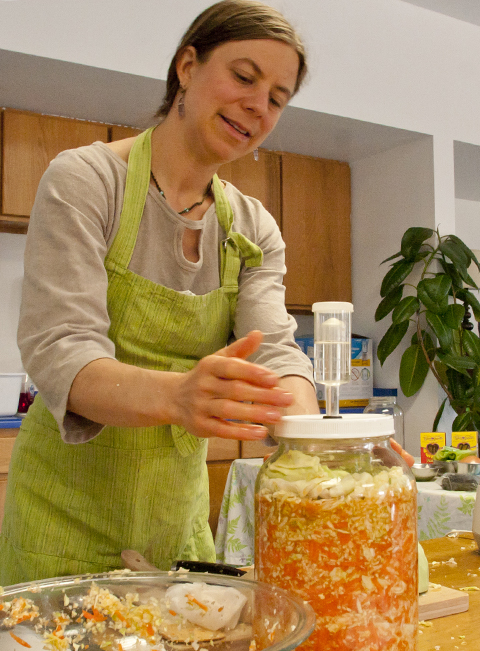
Fermenting of foods is a process in which foods are pre-digested by friendly enzymes and good bacteria.  Cultured veggies’ are strengthening to the immune system, are soothing to the nervous system, help reduce sugar cravings and regulate weight and appetite.

Sauerkraut Basics:

You will need:

* one gallon air tight jar with fermentation dome

* one smaller glass jar

3-4 head organic cabbage
6-10 organic carrots
one head garlic
high quality sea salt
probiotics (powder or capsule form)
food processory (optional)
large wooden soup ladle or other tool for pounding
large glass bowl

To Prepare Sauerkraut:

Peel outer leaves fro cabbge and set aside.
Finely chop cabbage, carrots and garlic or shread in a food processor.
Combine ingredients in large glass bowl.  Mix thoroughly.
Add 3-6 tablespoons of sea salt and combine.  Properly fermented sauerkraut should still have a crunchy texture.
Add 3 capsules probiotics and mix. (Adding probiotics speeds up the fermentation process)
Pound the sauerkraut until you notice juices releasing.
Pack the sauerkraut into the Fermentation Dome be sure to press the kraut firmly into the bottom of the jar to eliminate any air bubbles that may be present.
Once the jar is mostly full, use the cabbage leaves that you have set aside tocover the top of your kraut.
Place a small jar with a little filtered water on top of the bed of cabbage leaves.
Fill your air tight water seal lid iwth filtered water to the line and place the lid atop your fermentaiton jar.

Keep an eye on your kraut for the first couple days and add more water or brine if necessary (all of your veggies shoul dbe submerged in the juices, I rarely have to add additional liquids).  Your sauerkraut will be done in approximately one to two weeks (it takes loner without probiotics).

Kimchi Tips:

Dress up your Sauerkraut with more flavors and it will be kimchi.  My favorite combination is green cabbage, carrots, broccoli, kale, red pepper, onion, garlic sea palm fronds or hijiki (sea veggies), turmeric, Himalayan Sea Salt, and FriendlyForce Probiotics.

Note:  By adding raw sea veggies to your kimchi you may reduce the amount of sea salt you need to add.  Properly made kimchi should still have a crunchy teture.

Sauerkraut is possible with little or no salt by fermenting the cabbage in wine, substituting caraway, celery and dill seeds for the salt or using seaweed in place of salt.  Salt-free kraut has a shorter lifespan than salted kraut.  Since feremetnaiton goes faster without salt, be sure to taste salt-free kraut frequetnly to monitor its progress and refrigerate it after a week or so.

Lisa Shelton

Food Combining Dos and Donts for the Holidays

Published - The Valley Times - Nov. 19, 2013

Food combination dos and don’ts for the holidays

For the VT

By Lisa Rohde

Thanks Giving memories...  too often we recall feeling overly stuffed, and bloated -- not to mention gassy -- at the festive occasion and gathering?

What if you were equipped with the right knowledge of how to enjoy this special time with friends and family, giving thanks to food abundance in our lives, without feeling uncomfortable, or embarrassed in your body?

When you understand what foods combine well together for optimal digestion, and which foods do not, you will be able to make far better choices day in and day out.  Not to mention you will feel better in your body at your Thanks Giving feast, and you will still have the opportunity to enjoy desert.

Please do not misunderstand me, I am not proposing that you eliminate any certain type of food.  Rather I am suggesting that the way one chooses to combine or not combine certain foods can optimize your digestion and comfort.  Good digestion, of course, maximizes your energy, and health as well.

First of all, it is important to know that proteins - including dairy, eggs, meat, nuts and seeds -- and high-starch carbohydrates  -- such as beans, breads, legumes, cereals, grains, pastas, peas, potatoes, pumpkins, squash, wheat and rice, do not combine well.  This is because protein foods require an acid medium produced in the belly to properly be digested.   Digestion of grains and carbohydrates begin in the mouth when you chew your food and create alkaline saliva medium and mix this into the food.

Acids and alkaline digestion mediums, when combined, cancel each other out, therefore causing indigestion and fermentation in the stomach.  Fermentation in the belly can result in tummy upset, bloating, gas, and food for pathogenic organisms; therefore supporting opportunist microflora that rob you of your otherwise needed nutrients from your food.

Combining healthy fats with grains and carbohydrates slows down digestion and the conversion of carbs into glucose keeping blood sugar levels more stable.  Healthy fats include, extra virgin olive oil, raw coconut oil, flax and hemp seed oil (you do not want to cook with flax or hemp oil but rather add it to your plate as a condiment).  Healthy fats also includes cultured butter, if you tolerate dairy, and seed or nut oils.

Dark, leafy, greens, and non-starchy, vegetables, including kale, collards, broccoli, cabbage, chard, celery, cucumber, lettuce, radishes, turnips, summer squash, and tomatoes combine excellently with either proteins or carbohydrates.  In other words, ones well combined plate may look like a combination of either green, non-starchy, vegetables with protein, or green, non-starchy, vegetables with carbohydrates.  Ratios should be around 70-80% green and non-starchy vegetables combined with 20-30% your choice either protein, or carbohydrate.

Mildly-starchy vegetables including artichokes, beets, carrots, cauliflower, corn, and peas, combine nicely with green, leafy, and non-starchy vegetables, healthy fats, and oils.  Though not quite as excellent a combination, mildly-starchy vegetables also generally combine okay with either protein or carbohydrate.

This leaves us with fruit. In general fruit should be eaten alone and is best first thing in the morning (after hydrating of course) when your belly is truly empty.  Fruit combines well with very little.  Normally fruit stays in the belly for the least amount of time, often no more than 30-minutes before entering the gut.  When fruit is combined incorrectly with other foods it is left to linger longer in the belly, which causes fermentation in the belly and of course feeds those not so friendly opportunistic organisms.  Because fruit rapidly leaves the belly this can make fruit a good choice if you must have a late night snack because no one wants food to linger in their belly all night long.

That said, fruit may sometimes be eaten with dairy, seeds, nuts, and green leafy vegetables, a perfect combination for a smoothie or desert.  In general, deserts and sugar based indulgences are best eaten alone.

My recommendations on the big Thanks Giving Day, celebrating the abundance of family, friends, and food, enjoy your soul food, don’t necessarily give anything up, rather space out the feast based on food combining rules.

Begin early with your main turkey, fish, or protein dish combined with a savory vegetable dish, the veggies being the bulk of your plate.  I suggest beginning with meat early, because, animal protein takes longest to digest sometimes a few hours.  Digestion also slows as the evening progresses.  Animal protein is also packed full of energy sometimes too much energy for the end of the day.  Following your protein dish pause, and allow digestion to occur.  Go for a walk and get some fresh air and breath into you.

Next enjoy your main carbohydrate or starchy additions with more green, leafy and non-starchy vegetables, perhaps a steamed greens medley.  When making mashed potatoes try combining starchy potatoes with less starchy cauliflower, and coconut oil and veggie broth as needed.  In the case of starchy pumpkin soup combine this with less starchy carrots and cauliflower and veggie broth.  And of course let the bulk of your plate be green, leafy, and non-starchy vegetables.

Finally, last but not least, after you have digested your super and perhaps enjoyed another walk, have some desert.  Delight yourself with a seasonal pumpkin pie, or maybe ice cream or yogurt with cranberries and fruit...  Being “bad” and enjoying special deserts and comfort foods now and then is important for your emotional well being.  

With luck you will complete eating by 7pm to allow your digestive system ample time to turn down for the night.  Digestion complete, your natural cleansing cycle will run every 24 hour cycle through the long dark nights of winter.  Conclude your festive night with a good digestive cup of tea peppermint, ginger or cinnamon spiced flavor, perhaps.

Remember to chew your food well.  For so many foods, including carbohydrates, digestion begins in the mouth with saliva.  Consider adding some probiotics or cultured foods such as sauerkraut, kimchi and kefir to your diet to further optimize, digestion and energy.  Keep hydration to between meal times as you don’t want to overly dilute your digestive juices.   Certainly sipping a cup of tea is fine at meal time.  I wish you a happy, healthy, and nurturing, holiday season.

Lisa Rohde Certified Holistic Health Coach CHC, AADP, is an expert in the field of preventative medicine, nutrition and life coaching, with a professional certificate from the Institute of Integrative Nutrition. Rohde offers individual counseling, workshops, and group classes. Connect with Rogue Living Well on Facebook and to learn more visit www.RogueLivingWell.com.

Lisa Shelton

Hay Fever Relief

Published in Illinois Valley News, April 10th, 2013

Healthy U By: Lisa Rohde

Hay Fever Relief

Allergy season is upon us.  Exposure to too many sensitivities tips the iceberg and brings on  those uncomfortable hay fever seasonal symptoms.  What if you could decrease  your sensitivities and increase your tolerance for combatting hay fever?

Exposure to one environmental allergy may be  tolerable, however, when you start piling  different pollens on the stack, the immune system gets overwhelmed.  What follows is a train wreck of runny and itchy noses, eyes, ears, throats, mouths, skin, headaches, you name it.

Further, the food you eat may  exacerbate  your  allergies.  As much as 70 percent of people with pollen allergies  experience unpleasant reactions after eating certain raw foods.  This is called crossover allergies or oral allergy syndrome.

When certain raw fruits, vegetables, seeds and nuts are eaten during allergy season, (spring and fall), the body can mistake  the  protein in the food for pollen, triggering and worsening allergic symptoms.

Depending what pollen allergy you have, you will want to avoid certain foods..  Because you have control over what foods you eat, you may consider getting a food allergy test.  Clearly if your results indicate a food allergy you can easily eliminate that food..  

 Not all food sensitivities are allergies; some are intolerances and will not show up in an allergy test.  The most thorough way to determine  food sensitivity is to do an experimental  elimination diet.   You could  keep a food diary noting what  you ate, any symptoms you notice directly following  consumption, how you feel two hours later, and how you feel over the next couple of days.

People with grass allergies may experience symptoms triggered from raw tomatoes, oranges, melons and figs.  Those with weed pollen allergies may want to avoid melons, cucumber, cantaloupe, banana, artichoke and zucchini.  They may find Echinacea, chamomile and hibiscus teas irritating too.  Additionally apples, almonds, cherries, strawberries and celery may exacerbate more than one type of allergy.  

It is also  helpful to eliminate pro-inflammatory processed and refined foods, sugar and junk foods, artificial sweeteners and additives, pesticides and genetically modified foods.  Look for GMO free labels on foods in particular corn and soy.

Everyone is bioindividual, so again, keeping a food journal will help you determine your own unique sensitivities.

Vegetables and fruits are necessary for human health and should make up the bulk of your diet.  Consuming more cooked vegetables and eliminating  raw fruits during allergy season is a good tip.  Try cooked apples, fried bananas, and soaked or roasted nuts instead.

Boosting your immune system reduces cross-reaction allergies.  Drinking plenty of water, exercising daily, and sleeping plenty, will also help to reduce your aggravating allergic symptoms.  

 You may find relief  from stinging nettle tea, or quercatin a vegetable derived anti-histamine and anti-inflammatory.  If  you tolerate bee products, local and aged medicinal honey and bee pollen may be useful, however some  suffer allergic reactions to bee products.  

Finally,  an anti-inflammatory diet in general is very beneficial.

“Healthy U” is presented by the staff and volunteers of Illinois Valley Counseling and Support as part of their mission to promote health in the Illinois Valley. 

Lisa Shelton

Beware of Sugar

Published February 27th, 2013 in the Illinois Valley News, Cave Junction, Ore.

Beware of Sugar 

By Lisa Rohde Holistic Health Coach of www.RogueLivingWell.com

Consumption of sugar, and the equally noxious high fructose corn syrup, is the primary reason for skyrocketing diabetes and obesity in America and likely the cause of many other diseases as well.  These include heart disease, hypertension, and cancer, according to obesity expert Robert Lustig M.D.

In the late 1700s, the average person consumed 20 pounds of sugar per year; in the late 1800s, 63 pounds of sugar per year; and today, 152 pounds of sugar per year. The average child today consumes 35 teaspoons of sugar daily and the average person one half pound of sugar per day. Sugar is hidden in virtually everything: beverages, alcohol, candy, junk food, and refined foods like bread, pasta, and cereal.  Years of excessive sugar consumption builds up fat in the liver leading to insulin resistance. As insulin resistance has been found to be a precursor to cancer,  experts are writing about the link between sugar and cancer as well.

A healthy immune system keeps its body under check and balance. Behind almost every symptom, be it colds, coughs, allergies, chronic pain, inflamation, headaches, chronic fatigue; or even behind serious illnesses such as asthma, diabetes, or cancer, nutritionists see a systemic imbalance.  Excessive sugar intake can create this type of imbalance, because sugar feeds the pathogenic fungus Candida albicans. Candida thrives on sugar.  It also robs us of nutrients weakening our immune system and making us more susceptible to chronic illness.

A diet high in green veggies and low in sugars and refined foods starves pathogenic organisms like Candida, while the good flora including beneficial bacterial and enzymes in you thrives.  Friendly microorganisms asist you in food digestion, nutrient availability, and enhancing your wellness.  It is important to nourish yourself with nutrients, minerals, and healthy organisms. 

One way to ensure you have healthy beneficial microorganisms in you is through probiotic suplementation or by incorporating living foods such as raw cultured saurerkruat into your regular diet.  Think whole foods, real foods, and be sure to eat plenty of vegetables, whole grains such as quinoa, millet and brown rice. Make sure you are hydrating with plenty of clean water, especially in the morning upon waking and before eating and in between meals. And finally, redefine "treat" to mean something that nourishes you.

Learn more at the FREE upcoming class, Sugar Awareness and Healthier Food Choices with Holistic Health Coach Lisa Rohde, www.RogueLivingWell.com, March 12, 2013, 5:45-6:30pm, at Illinois Valley High School, 625 E. Rivers St. Sponsored by Illinsois Valley Counseling and Support, www.ivcouselingandsupport.org. 

Lisa Shelton

Macrobiotics Diet For Healthy Balance

Published May 7th, 2013, Valley Times, Cave Junction, OR

Macrobiotic Diet Promotes Healthy Balance

By Lisa Rohde for the VT

The principles of Macrobiotic Diet comes from Ancient Ayurvedic healing principles and Buddhism.  Macrobiotic theory emphasizes the balance between yin and yang, two opposing forces in nature.  When there is excess yin or yang it is thought weakness and illness arise.  The goal of Macrobiotics is to bring balance between yin and yang.  

Based on the principle of Macrobiotics, food we eat embodies either yin or yang qualities, so it is important to pay attention to the foods we choose.  A Macrobiotic diet is primarily plant based and includes lots of fresh vegetables as well as whole grains, legumes, fruits, seeds and nuts.  Animal protein, primarily fish, is eaten sparingly two to three times each week.  Proponents of macrobiotic ways of eating and living say they feel more energetic, have stronger immune systems, and improved memory.  Buddhist practice recommends the foods you eat contribute to an overall “great life.”  Living simply and preparing and eating foods in a a way that is in harmony with the universe is of utmost importance.  Generally speaking Macrobiotics recommends ones choice of foods be local, seasonal and organic.  The best way to ensure you are eating local, seasonal, and organic foods is to support your local farmers market.  Keep an eye out for community supported agriculture CSA opportunities and buying club options.  

Furthermore, a visit to your local health food store can provide options and knowledgeable resources, so be sure to inquire where the food comes from.  The macrobiotic plant based diet primarily vegetables and whole grains has been shown to help reduce cardiovascular disease and possibly some cancers.  Choose dark leafy greens, cabbage, onion, radishes, broccoli, cauliflower, carrots, butternut and acorn squash.  Be sure to include sea veggies in your cooking. Complement your veggies with whole grains primarily brown rice, also included in macrobiotic diet is millet, whole barley, whole oats, spelt, corn, buckwheat, and rye as well as other grains but only occasionally.  Enjoy beans and legumes once each day including lentils, chickpeas, azuki beans and black soybeans (black soy beans are not genetically modified, most white soy beans are).  It is best to cook your beans with a sea veggie such as kombu or wakame to improve digestibility.  Miso is a great addition to many meals.

Enjoy your seeds and nuts, sunflower seeds, sesame, almonds, walnuts, coconuts, pecans and peanut butter in moderation no more than two cups per week.  While whole fruit is permitted as part of the macrobiotic lifestyle, it is generally eaten only occasional a few times each week.  Fruits that are not grown locally are best avoided.  This is because your kidneys alter vitamin D released from the liver to regulate calcium levels.  A better stronger source of vitamin D comes from being in the sun.  Because your kidneys can’t see outside they read the weather by monitoring the food and drink you consume.  For instance, if you live up north and you eat a banana from the tropics which has lots of potassium, chances are your kidneys will think you’re in the tropics and that your skin must be roasting in the sun making lots of vitamin D, so your kidneys stop activating vitamin D and you quickly loose your calcium absorption.

Buddhism suggests that toxins found in oily rich processed animal foods should be avoided.  Animal yang foods including meats, dairy and eggs are considered harmful (as are soy-based dairy and egg substitutes).  However, there are times when eggs may be used medicinally when one suffers illness from consuming too much yin foods like processed, refined, and sugar based foods, fruit juices and alcohol, then a moderate amount of eggs may be beneficial on an individual basis.  While fish is included in moderation, shellfish is to be avoided.

Avoidance of toxins is very important.  Eliminating processed foods, such as canned or boxed foods with preservatives and dyes, as well as avoiding sugar, sweeteners and stimulants such as caffeine and hot pepper based spices is a must.  Natural sweeteners like maple syrup and honey are okay occasionally on an individual basis.  Access fats from peanut butter or plant oils should be kept to a minimum.

In addition Microwaves should be avoided, and only stainless steal, cast iron, glass or wood should be used; plastic should be avoided.  Do not use aluminum or nonstick cookware.  Spring water should be used whenever possible, and cooking should be predominately on the stove top with natural gas because it comes from the earth.  There are five important phases to a balanced macrobiotic way of eating, sweet, sour, bitter, salty, and sharp foods.  Incorporating all flavors into your diet takes some planning.  Vegetables are typically the sweet portion of your meal.  Sour may be found in a salad dressing or a pickle.  Sea veggies are generally salty.  Proteins can become sharp by preparing them with mustard or ginger.  If your meal does not include all five flavors consider adding a soup with the missing variables.  Seasonally, summer is considered yang because of the heat and therefore one should select more fresh cooling or lightly cooked foods which are considered yin foods.  

On the opposite end of the season winter is yin because of the cold and so one would want to choose more warming yang foods such as soup.  In Macrobiotics emphasis is put on cooked or lightly cooked foods as healing to the body.  In spring you eat more fresh and wild greens and in winter you eat more squash or cooked foods.  Spring launches the season for local farmers markets so be sure to reach out to your local sources.

Lisa Rohde Holistic Health Coach, is an expert in the field of preventative medicine with a professional certificate from the Institute of Integrative Nutrition.  Rohde offers individual counseling, workshops and group classes. Connect with Rogue Living Well on Facebook and to learn more visit www.RogueLivingWell.com.


Lisa Shelton

Planning Healthy Crowd Friendly Allergy Free Menus

Published May 21, 2013, Valley Times, Cave Junction, OR

Planning healthy, crowd-friendly, allergy-free menus

By Lisa Rohde

For the VT

Summer is around the corner, school is nearly out and the time for get togethers is upon us.  

However, planning crowd-friendly healthy menus is challenging nowadays as food sensitivities are on the rise.  Children especially can feel left out when food options are not safe for them to eat.

The best strategy is to educate yourself on common food allergies as they are potentially fatal.  A food allergy is when the body causes an overreaction of the immune system towards a particular food protein.  The top ten food allergies common in younger children are milk, eggs, peanuts, tree nuts, sesame, coconuts, wheat, gluten (also in barley, rye and oats unless certified otherwise), soy, and shellfish.  The plan is then to prepare group meals, snacks, and deserts with the lowest common denominator in mind.  

I’m not suggesting that you cannot have milk available but have alternative options and keep milk as a side choice and out of the main dish.   

Always make ingredient labels for food clearly visible.  In general make food choices that are vegan (free of animal products), wheat and gluten free.  Always have options to choose from.  For instance it is perfectly acceptable to have a meat or dairy option on the side but best to not include it in the soup unless if you are making a veggie soup option too.  Similarly it is also best to leave nuts and seeds as a side option, or have multiple choices, a batch of zucchini muffins clearly labeled with walnuts and a batch with no tree nuts.

Beware of hidden sources of wheat.  Things to avoid include baked goods or anything made from flour, beer, cereal, pasta (unless gluten free), cornbread, crackers, gravies, sauces, imitation meats, licorice, some ice creams, marinades, teriyaki, soy sauce, and more.  Also hidden sources of soy include, baked goods, canned soup, canned tuna and meats, processed deli meats, cereals, protein energy bars, infant formula, peanut butter, vegetable oil, worcestershire sauce, and more.  Be careful eating at Asian restaurants even if you order a soy-free dish.  As a rule of thumb, read the ingredient list, and if you do not know what it is, do not buy it.

Further more washing your hands before you eat and also after you eat is safe etiquette.  We want to keep germs to a minimum, but what about preventing cross contamination of foods that are potentially hazardous to others.  Always use separate serving utensils for each dish and wash your hands after handling foods that could pose a threat to others, as you do not want to pass on the food residue in your next handshake.

What do I suggest?  

If the occasion is a birthday party, consider making a gluten free vegan cake or make two cakes one that is gluten free vegan.  Making a gluten free vegan cake is really easy, first of all most stores now carry ready made mixes.  If you want to make a gluten free vegan cake from scratch simply substitute a blend of brown rice flour and millet flour for wheat flour.  Substitute a dairy free beverage for milk.  Substitute apple sauce for egg.  Now you have a vegan wheat-free cake.

Guacamole is always a favorite.  Combine avocado, cilantro, onion, garlic, lemon, salt and pepper to taste.  Instead of crackers and chips, serve this with carrots and celery.

How about some polenta pesto pizza.  Simply make a polenta crust, spread your favorite homemade pesto (basil, cold pressed olive oil, pumpkin seeds, and garlic blended), tomato sauce (optional), and top with your favorite veggies perhaps onion, red pepper, spinach, and olive.  Serve shredded cheese such as feta on the side, or cook one pizza with cheese and one without.

Try cooking a whole grain such as soaked quinoa or millet.  Use veggie broth or leftover veggie water (from steaming your organic veggies) instead of water when cooking your grains.  Combine cooked grains with fresh greens and herbs including spinach, kale, basil, mint, and cilantro.  Need to cool down this summer, whip up a green smoothie with low glycemic berries, fresh kale and spinach, or green powder.   Add even more nutrients by blending your smoothie with leftover veggie water (from steaming your organic veggies).  Be sure to make extra smoothie and freeze it in pop-cycle molds.

Perhaps a hands on, do it yourself, green carrot roll bar.  Finely shredded carrot in one bowl, minced garlic, minced ginger, dulse (sea veggie flakes), turmeric (anti-inflammatory), and a choice of almond butter, sunflower seed butter, or peanut butter, (remember separate utensils), all in their separate bowls, fresh spinach or baby greens, and raw nori sheets.  Each person may individually combine the ingredients of their choice onto a nori sheet, roll and enjoy, a fun healthy, yummy, activity for kids.

Finally, aim for iced tea instead of sugary juice.  Choose your favorite caffein free herbal tea and make a large batch to share.  Garnish with a fresh mint leaf, slice of lemon, or lime.

Lisa Rohde Holistic Health Coach, is an expert in the field of preventative medicine with a professional certificate from the Institute of Integrative Nutrition.  Rohde offers individual counseling, workshops and group classes. Connect with Rogue Living Well on Facebook and to learn more visit www.RogueLivingWell.com.

***

Lisa’s Lemon Zucchini Cake:

1 1/2 cup brown rice flour

1 1/2 cup millet flour

4 tsp baking powder

1/2 tsp quality sea salt

3/4 cup sucanat unrefined dry sugar retaining molasses content (optional replace with 1tsp stevia)

1 1/2 cup dairy free milk (try homemade millet milk, 1 cup millet, 6 cups water, blend, then strain)

1/2 cup oil (I like to use coconut oil and I clearly label this)

1 cup finely grated zucchini

zest of 1 lemon (grated peel)

juice of 1 lemon

1/2 cup apple sauce

Preheat oven to 350’ F, mix well, pour into two lightly oiled glass pie pans and back for 30 minutes.  

Icing:

2 cups cashew soaked a few hours or overnight and rinsed

zest of 1 lemon

juice of 1 lemon

4-8 tablespoons water, as needed for blending.  

Blend and chill in the refrigerator to thicken

Once the cake is cool, spread icing, layer the 2 cakes, spread more icing, berry garnish, and enjoy

Next Previous